
Cartier’s Icons: Five Designs That Hold Their Value
Few names in jewellery carry the weight of Cartier. Founded in Paris by Louis-François Cartier in 1847, the house became known as ‘the jeweller of kings and the king of jewellers’, and its clients have ranged from royalty to Hollywood.
Many of its best-known designs go back generations, shaped by everything from Art Deco to the Egyptian revival. Chosen well, Cartier pieces not only hold their value but can rise in value over time, thanks to the strength of the name and the quality of the materials and craftsmanship.
Here are five Cartier classics, and what makes each one so enduring.
The Love Bracelet
Probably Cartier’s most famous design, the Love bracelet was created in 1969 by Aldo Cipullo, a New York jeweller who had worked for Tiffany & Co. and David Webb. It was meant to stand for lasting love, and in Cipullo’s words to look semi-permanent.
Rather than slipping on, the bracelet is closed with a small screwdriver, and its band is decorated with screw heads. It has been worn by famous couples ever since, and is made in white, yellow and rose gold, plain or set with stones.
The Trinity Ring
Designed in 1924 and long associated with Jean Cocteau, the Trinity ring is made of three interlocking bands in white, yellow and rose gold, often said to stand for friendship, fidelity and love. The same motif runs through the wider Trinity collection of rings, bracelets, necklaces and earrings, and the design has been in production for a century.
Panthère de Cartier
The panther has been a Cartier emblem for more than a hundred years. It first appeared in 1914, when Louis Cartier commissioned the artist George Barbier to paint a lady with a panther at her feet, and the first panther piece was a wristwatch with a pattern that suggested the animal’s coat.
Since then the panther has appeared in rings, bracelets, brooches and watches, from understated to spectacular. The most celebrated pieces, such as those made for the Duchess of Windsor, are among the most famous jewels of the 20th century.
The Tank Watch
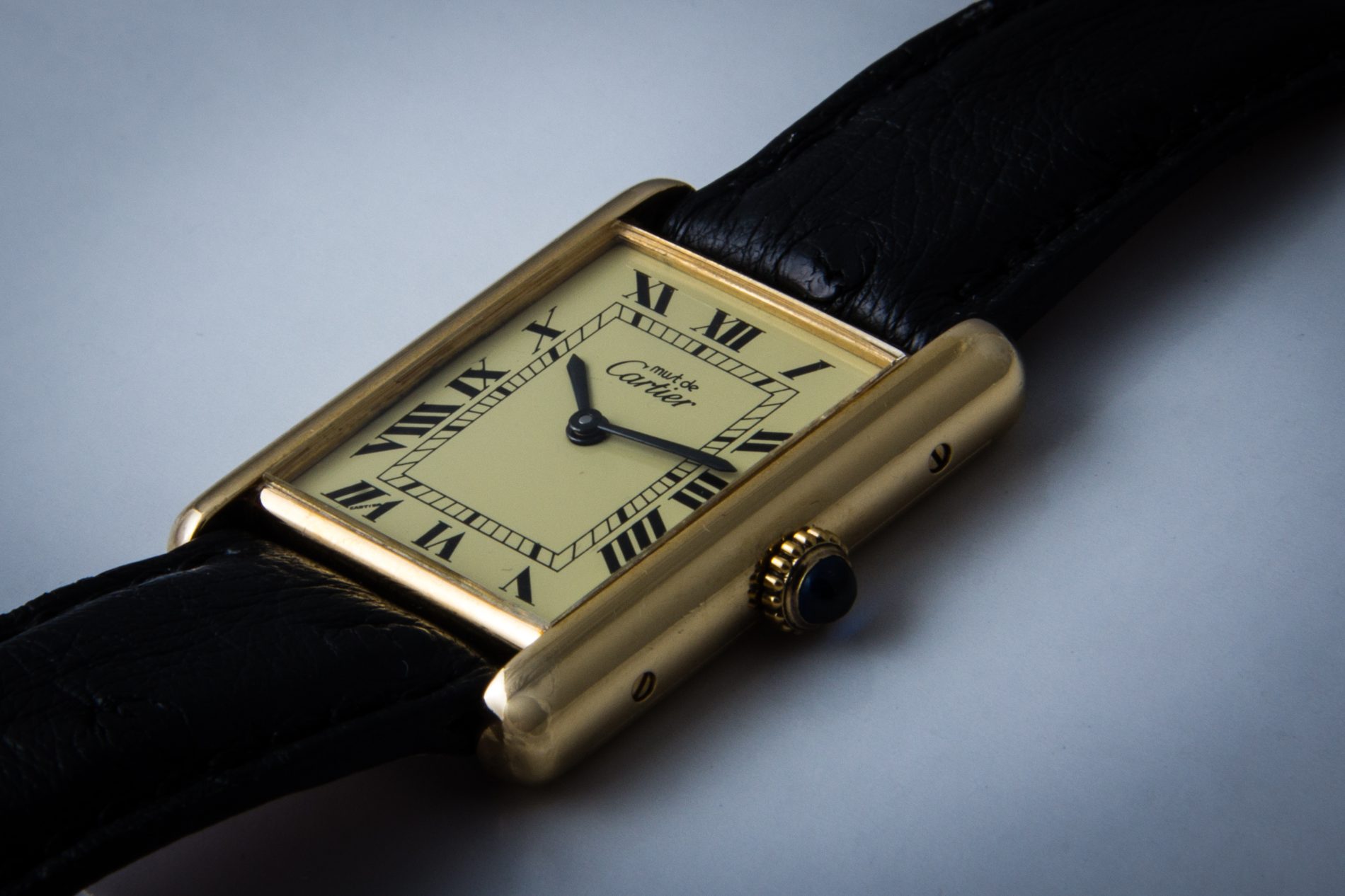
Cartier was a pioneer of the wristwatch, creating the Santos for the aviator Alberto Santos-Dumont in 1904. Its greatest watch, though, is the Tank, designed in 1917 and inspired by the outline of the tanks of the First World War. The rectangular case has been reinterpreted many times since, and for many the Tank remains the ultimate dress watch. Early and limited examples are keenly collected.
Juste un Clou
Another design by Aldo Cipullo, Juste un Clou (‘just a nail’) arrived in 1971: a single gold nail bent around the wrist. Its minimalist, unisex style won it a cult following, and Cartier relaunched it as a full collection in 2012.
What affects value
For any Cartier piece, value depends on the model, metal and stones, condition and, crucially, authenticity: Cartier designs are among the most widely copied in the world. Signatures and serial numbers, original boxes and certificates all help. Cartier also raises its retail prices regularly, so jewellery insured at the price paid a few years ago may now be underinsured.
Coram James values jewellery and watches for insurance, probate, divorce and sale. Call 020 7305 7360 or contact us.
Adapted from an article first published in 2020, updated October 2026.