
Vintage Clothing: What Is Your Wardrobe Worth?
By Richard Lester
Clothing is often overlooked when it comes to insuring house contents, despite the fact that there is often a significant amount of value in a typical wardrobe.
Designer shoes, handbags, coats, suits, sportswear and outdoor clothing should all be considered when setting a figure for household insurance, and all too often they are either undervalued or forgotten completely.
With the resurgence of vintage clothing, especially 20th century British design, the contents of wardrobes and trunks in the attic have never been more worthy of accurate insurance.
The market
Recent years have seen some notable auction results for British designers. Early pieces by John Galliano have performed particularly well, including £65,000 for a ‘Les Incroyables’ coat from his influential 1984 degree show at Saint Martin’s School of Art, and £22,000 in 2017 for an example from his ‘Forgotten Innocents’ collection.
Earlier 20th century pieces continue to sell well, with 1920s couture evening dresses often achieving between £500 and £1,500, and a 1960s kaftan by the fashionable menswear designer ‘Mr Fish’ selling for £2,200 in 2019.
Here are some key pieces to look out for, and some common pitfalls to avoid.
The Age of Elegance, 1900 to 1920
Nothing beats Edwardian womenswear for elegance, and prices have risen for good examples of day and evening wear.
Most collectible: evening wear and fine embroidered ensembles, cream linen summer coats and dresses trimmed with lace or broderie anglaise, and clothes attributed to design houses.
The Jazz Age, 1920 to 1930
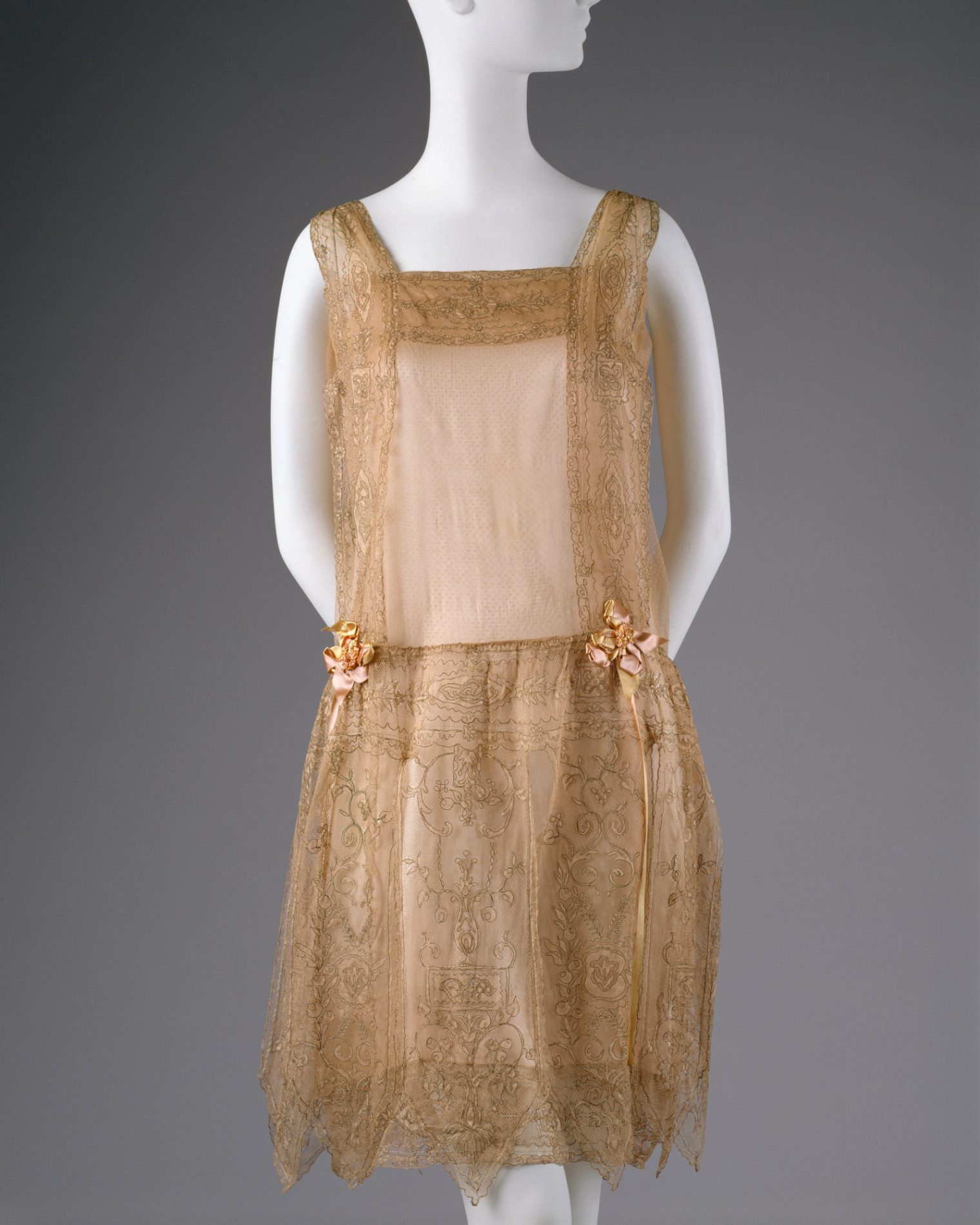
Prices for the elegant, wearable clothes of the 1920s and 1930s have always been high, and by far the most covetable designs are the beaded dresses so evocative of the period. Their delicate filigrees and embroidery make them among the most fragile clothes of the 20th century, and good examples from a dealer can cost upwards of £500. Ironically, it is the everyday clothes that are hardest to find, and early sportswear is also highly sought after.
Most collectible: heavily beaded dresses in silk or layered chiffon, top hats, dinner jackets, and coats by Daks or Burberry.
What to look for: beading on silk is particularly fragile, and flapper dresses often survive in poor condition because of bad storage.
The Art Deco Period and Wartime Fashion
The 1930s marked the beginning of the ready-to-wear explosion, but the decade also produced some of the most enduringly sought after pieces. Distinguished British fashion houses including Worth and Lachasse thrived in Mayfair, and attractive, well-designed clothes were made for the great department stores, including Simpsons, Harrods, Bourne & Hollingsworth and Gamages. The wartime CC41 utility scheme encouraged thrift and good design, and even Norman Hartnell designed clothes for Berkertex under strict controls on decoration and cutting.
Most collectible: bias cut evening dresses in satin, moss crepe and chiffon, Chinese embroidered silks, calf length day dresses in geometric prints, and CC41 labelled menswear and womenswear.
The New Look and Ready-to-Wear, 1945 to 1960
After the restrictions of the Second World War, Christian Dior’s ‘New Look’ of 1947 had an extraordinary impact on the fashion world, completely changing the rules with metres of luxurious fabric and dramatic tailoring. In Britain it was some time before versions of the designs became widely available, interpreted for the domestic market by the great couturiers of the day and duly copied by the department stores. The 1950s saw an explosion of well-made ready-to-wear clothes sold throughout the country in department stores and dress shops. Large quantities survive, so collectors can afford to be discerning.
Most collectible: couture clothes by Norman Hartnell, Hardy Amies, John Cavanagh and Digby Morton, floral print dresses by Horrockses, Susan Small and Jean Allen, and cheaper versions of couture clothes by Julian Rose, Kitty Copeland and Frank Usher.
Swinging Sixties, 1960 to 1969
The Sixties is a story of three parts, all of which offer terrific scope for the collector. The first half of the decade, when the rules of formal dressing were still largely in place, is often overlooked and produced some exceptionally elegant clothes. The mini skirt took off in earnest from 1964, thanks to the likes of John Bates and Mary Quant, and went on to dominate the decade. The closing years were about nostalgia, craft, escapism and a return to ankle-skimming hemlines.
Most collectible: mini dresses by John Bates, Mary Quant and Foale and Tuffin, futuristic fabrics including mesh and plastics, and long evening dresses by Biba, Gina Fratini, Thea Porter and Ossie Clark.
What to look for: genuinely early mini dresses are hard to find, so always check whether a hemline has been altered. As a general rule there should be no hand sewing on the hem of anything other than couture clothes. If there is, it usually means the piece has been altered or repaired.
Contrasting Approaches, 1970 to 1980
The 1970s and 1980s, long regarded as ‘the decades that taste forgot’, in fact produced some of the most finely crafted couture clothes to date. Bill Gibb, Ossie Clark and Jean Muir all keep a devoted following, and the early hand printed cotton clothes made by Laura Ashley in Wales have risen substantially in value, helped by a retrospective at the Fashion Museum in Bath.
Most collectible: maxi dresses in vibrant prints by Jean Varon, Biba and Yuki, coats and suits by Rembrandt, and early work by designers such as Bruce Oldfield, Vivienne Westwood, Bodymap and Katharine Hamnett.
Names to watch: early pieces by John Galliano, Alexander McQueen and Sarah Burton.
Caring for a Collection
As a rule, cleaning vintage clothing should be approached with extreme caution. Dry cleaning should be avoided on all but the most modern pieces, as garments endure extremes of heat and movement that can shatter beads and fabric, and the process can even make discolouration worse.
Finding space can be a real problem as a collection grows, but it is vital that vintage clothes and textiles are stored correctly. Light, heat and insect attack can all cause major damage. If possible, use padded hangers, store more fragile items in acid-free tissue paper and conservation boxes, and check regularly for deterioration.
Buying and Research
Recent years have seen more couture clothes from the 1960s come onto the market, and collectors may be witnessing the last period when it is easy to buy them from auction or dealer.
There are relatively few places to buy quality British vintage clothing, as the number of dealers with shops has fallen. However, a small group of auctioneers across the UK now hold regular clothing sales and are usually happy to provide detailed condition reports free of charge.
For owners wishing to find out more about their couture clothes, a remarkable amount of information can usually be tracked down about individual designs. The V&A collection is second to none and holds the John Cavanagh, Lachasse, Worth and Victor Stiebel archives, while the Fashion Museum in Bath has a large collection of photographs of Lachasse and Worth designs worn by the houses’ own models.
Never has it been more possible, or more enjoyable, to own and research quality British clothes, tracing their origins through London’s vanished couture showrooms and ateliers to today’s auctions, dealers and collectors.
About the Author
Richard Lester trained with Sotheby’s in the early 1990s, having worked for Osborne & Little and Liberty, and combines writing with valuations of modern and vintage clothing. He is the author of John Bates: Fashion Designer and Photographing Fashion: British Style in the Sixties.
Coram James values clothing, accessories and textiles for insurance, probate, divorce and sale. Call 020 7305 7360 or contact us.
First published in 2020, updated October 2026.